
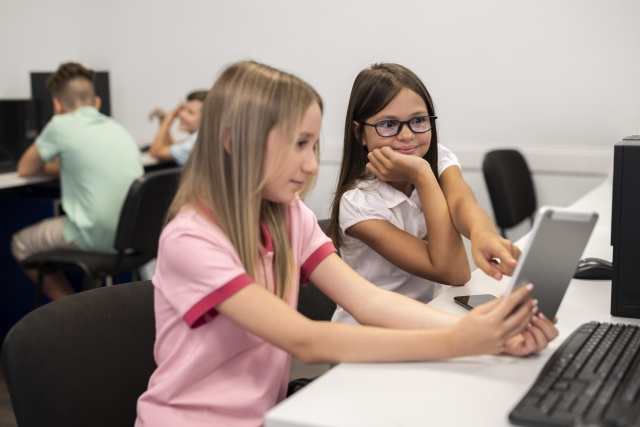
Girls’ Access to Education
Current statistics reveal significant disparities in global education, particularly affecting children and youth between the ages of 6 and 18. In 2021, an estimated 244 million children were out of school worldwide, with 118.5 million girls and 125.5 million boys being deprived of education. To assess and compare access to schooling, the out-of-school rate is calculated as the proportion of students within the official age range for education in a specific region who are not enrolled in it.
While progress has been made in achieving gender parity in primary education, with only 49% of countries reaching this milestone, the gender gap widens at the secondary level. Early child marriage emerges as a significant factor contributing to girls' dropout rates during secondary education. Disturbingly, current trends predict that by 2050, Africa will witness the highest rates of early child marriage, resulting in approximately 250 million child brides. Poverty plays a major role in driving this trend. Interestingly, ending early child marriage globally has the potential to generate over $500 billion annually, as reported recently.
Tragically, approximately 60 million girls experience sexual assault on their way to school each year. These incidents not only impact their physical and mental well-being but also contribute to lower attendance and increased dropout rates. Moreover, some countries impose restrictions on pregnant, married, and parenting girls, including barring them from attending school, sitting exams, or separating them from their peers under the pretext of negative influence. Legal protections must be established to ensure their access to education. Following the Ebola outbreak, school closures resulted in a spike in teen pregnancies. Similarly, concerns are arising about the aftermath of school closures due to the COVID-19 pandemic, as girls may be prevented from returning to school due to increased caregiving responsibilities within their families.
The top five countries with the highest number of children excluded from education are India, Nigeria, Pakistan, Ethiopia, and China. Sub-Saharan Africa stands as the only region experiencing an increase in the number of out-of-school children, as attendance rates fail to keep pace with the growth of the school-age population. Shockingly, in Burkina Faso, only 1% of girls manage to complete secondary school.
By increasing girls' access to education, we can combat issues such as child marriage and infant mortality. Additionally, it leads to a significant increase in their lifetime income and strengthens the economies they contribute to. Remarkably, due to increased education, girls are now expected to live eight years longer compared to 25 years ago. Equal access to education equips girls with better opportunities in the labor market, improves their financial circumstances, promotes family planning, and reduces rates of early child marriage.
Financial incentives have been employed to enhance girls' enrollment in secondary schools. However, studies indicate limited success, such as a mere 0.03% increase in women’s education chances through a stipend program in Pakistan. Similarly, a secondary school stipend program in Bangladesh resulted in increased access at the lower secondary level but failed to improve enrollment and girls' performance at the higher secondary level. These findings highlight the limitations of financial incentive programs when not accompanied by comprehensive social interventions addressing education quality, cultural norms, and indirect costs of girls' education. It is crucial to engage men and communities o transform their perceptions of women. Cash transfers and financial incentives alone are insufficient to change deeply ingrained beliefs that perpetuate subordination and violence against women.
At Genderscope, we strive to shed light on these critical issues surrounding education disparities and the empowerment of girls. We believe that by addressing the barriers girls face in accessing education and promoting gender equality, we can create a more inclusive and equitable society. Join us in our mission to break down these barriers, uplift girls' voices, and empower them through education. Together, we can make a significant impact on the lives of girls worldwide.